
The complete guide
How To Choose A Small Gym Bag That Actually Stays Fresh
The problem with most gym bags
Almost nobody buys a gym bag because their old one fell apart. They buy one because the old one started to smell, or because everything inside it ended up in one damp pile.
Think about how a normal session ends. You are warm, slightly rushed, and you have a wet towel, a pair of trainers that have been on a rubber floor for an hour, a half empty bottle and a set of clothes you want to wear again later in the day. If your bag is one big open sack, all of that goes in together. The towel soaks the shirt. The trainers press against the clean clothes. By the next morning the inside of the bag has a smell that no amount of airing fixes quickly.
A good small gym bag solves this with layout rather than technology. Separate the wet from the dry. Separate the shoes from everything else. Give the small items their own homes so you are not emptying the whole bag to find a locker key. That is the whole job.
How this bag is laid out
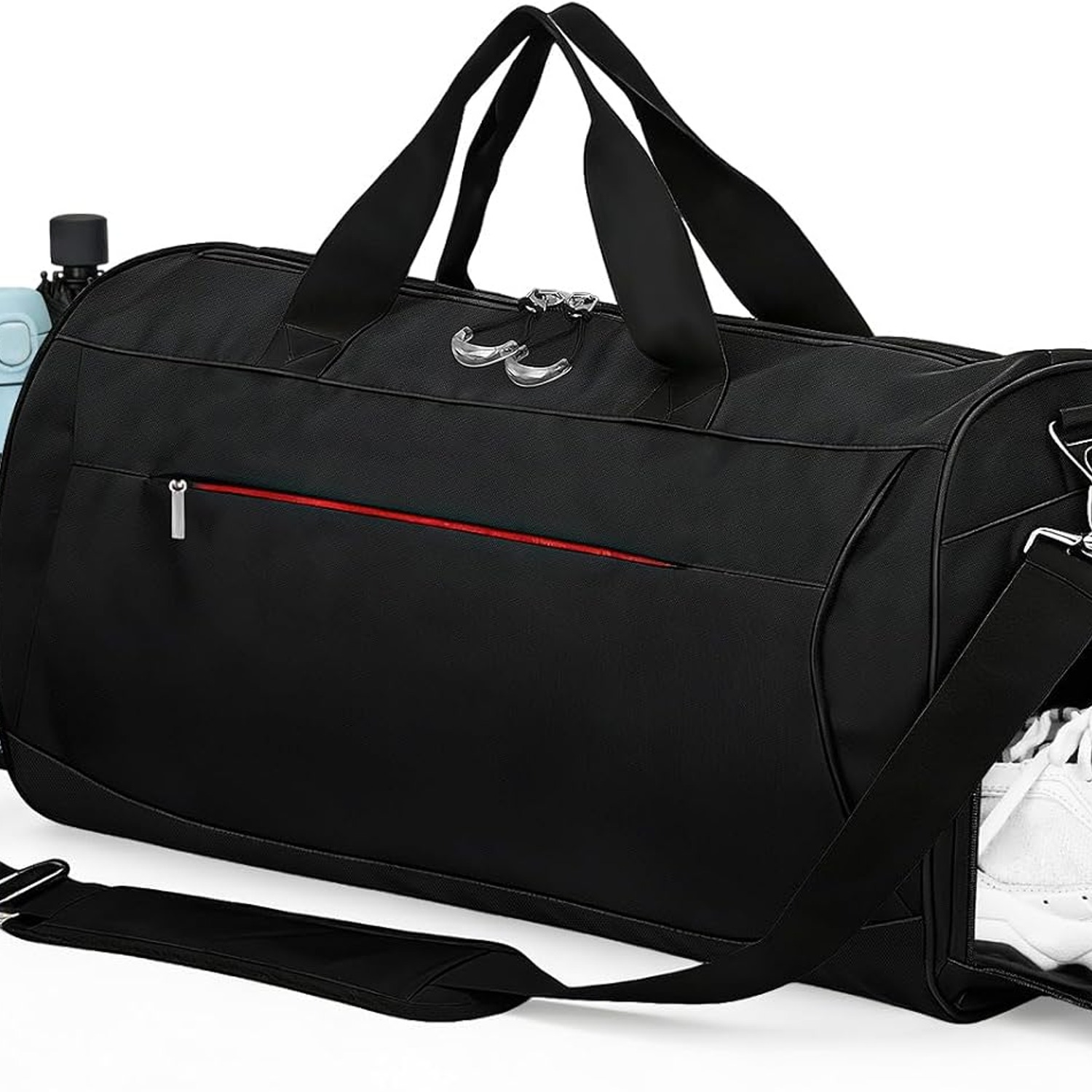
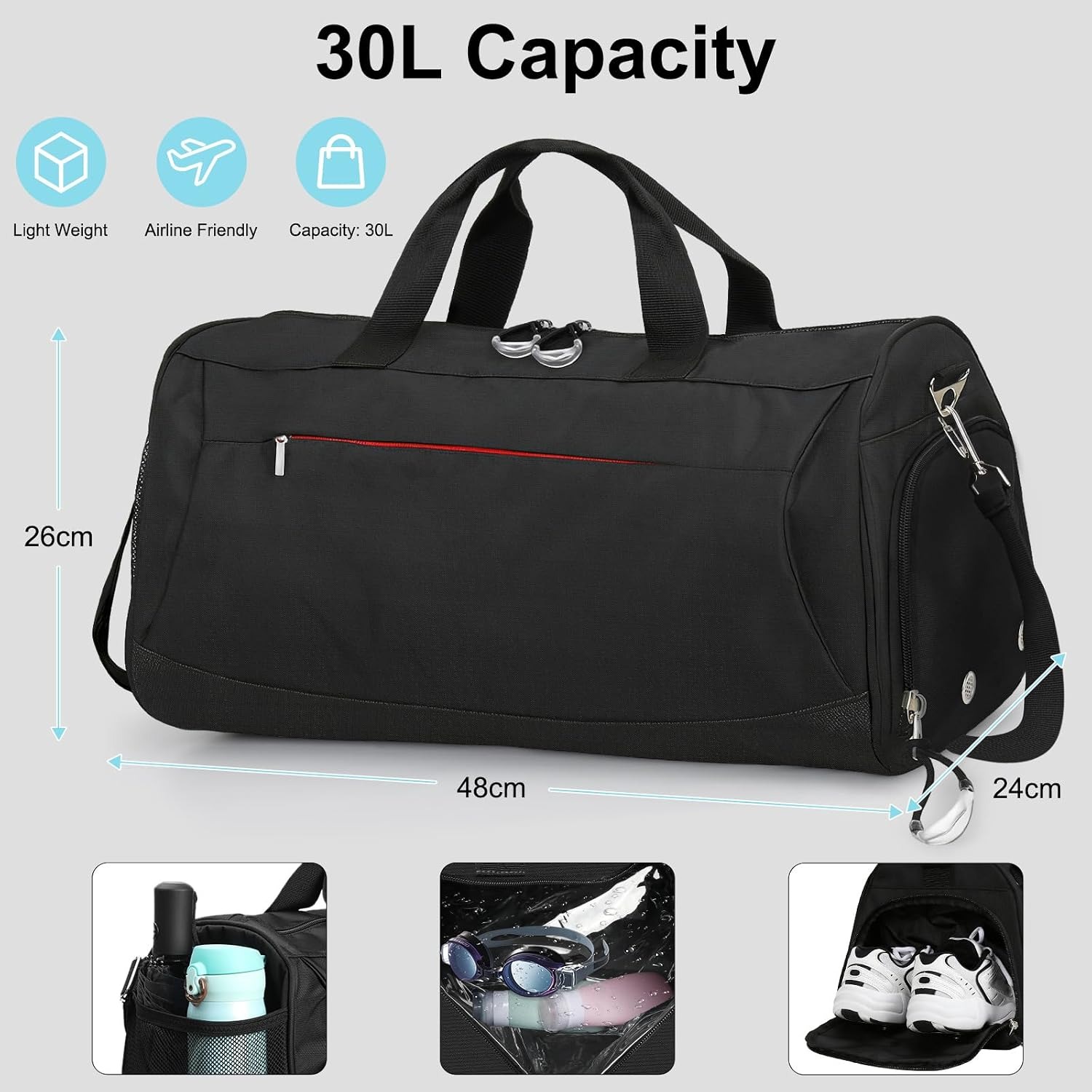
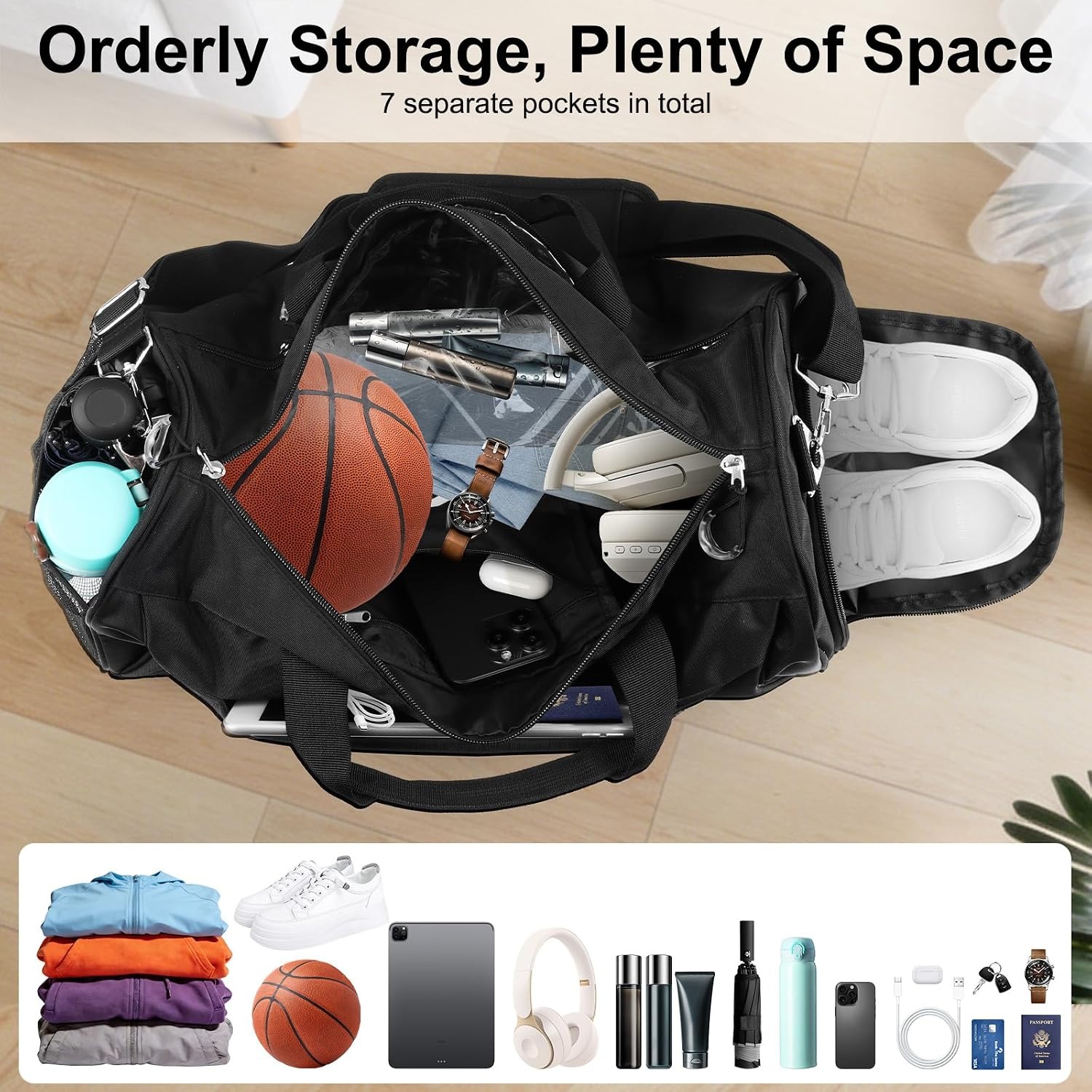
The duffle has six compartments plus a side mesh pouch, and each one has a clear purpose.
The main compartment is the big space, opened by a double slider zip so you can part it from either end. Inside that sits a small zip pocket for the things you want to keep flat and findable, like a card or a set of keys.
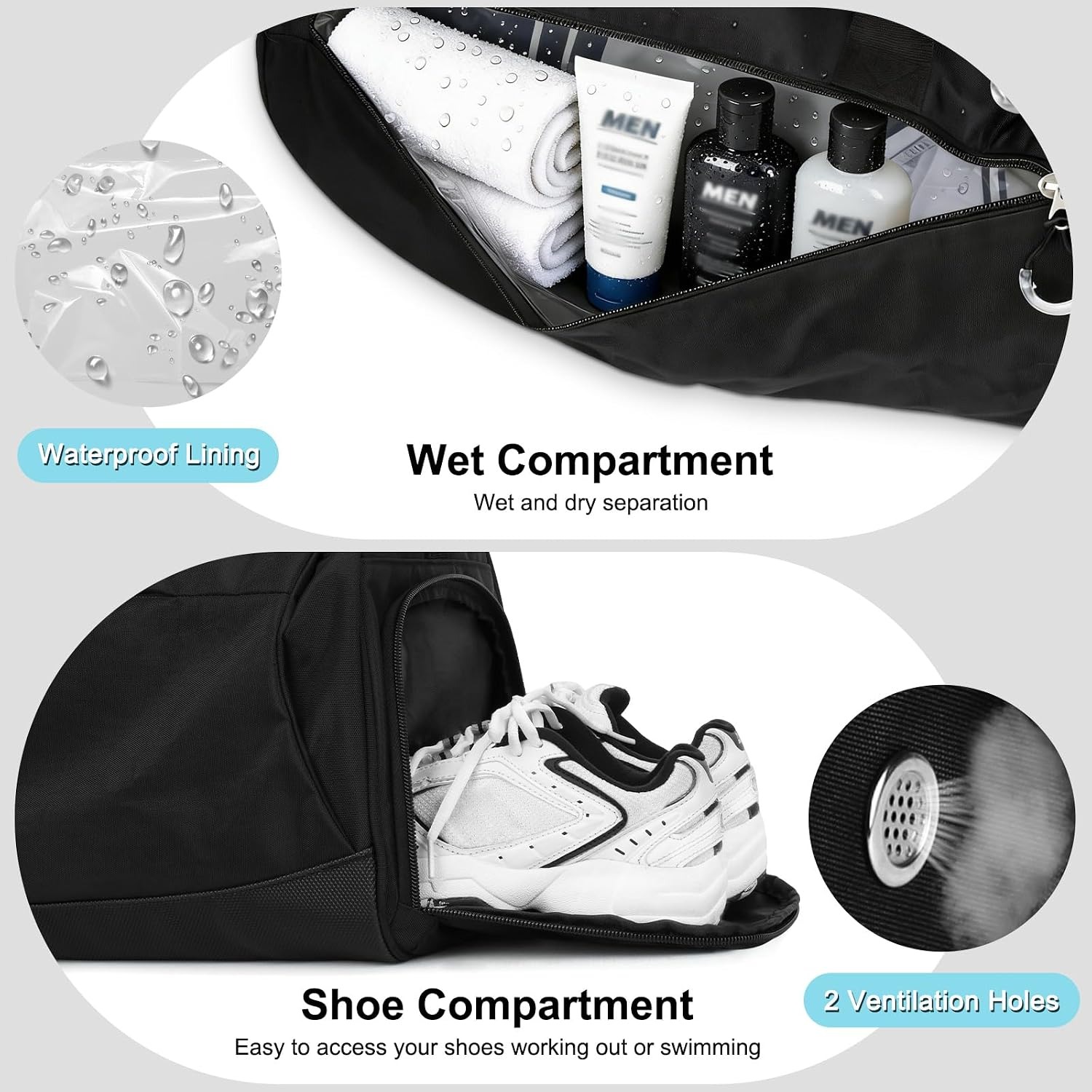
The wet compartment is the part people notice most. It gives damp towels or swimwear a place that does not touch the rest of your kit. If you swim, this is the difference between a bag that is usable on Tuesday and one that needs an airing after every Monday.
The shoe compartment sits separately and has ventilation holes. Trainers go straight in, muddy boots too, and air moves through instead of being sealed in. Clean clothes never share space with the soles of your shoes.
On the outside there is a zip pocket at the front for phone and wallet, a medium front pocket for bulkier bits like a cap or a strap, and an elastic side mesh pouch for a bottle or shaker. The elastic matters because bottles vary a lot in width. A rigid pocket fits one bottle. A stretch pocket fits most of them.
The size question
Capacity is 30 litres, and the bag measures 48 x 24 x 26 cm. That number sounds abstract, so here is the practical version.
Thirty litres comfortably holds a change of clothes, a towel, a pair of trainers in the shoe section, a bottle, and the usual pocket contents. Add a hoodie and it is comfortably full. Add a full set of winter layers, boots and work clothes and it will be tight.
For a lot of people, that is exactly right. A compact sports duffle bag you can sling over one shoulder and carry on a bus is more useful day to day than a huge holdall that is half empty every session. It also fits lockers better, which is a real consideration if your gym has the narrow kind.
If you regularly carry boxing gloves, a full soccer kit with shin pads and two pairs of boots, or gear for two people, size up. If you are packing for one person and one session, this is the size that works without waste.
Materials and build
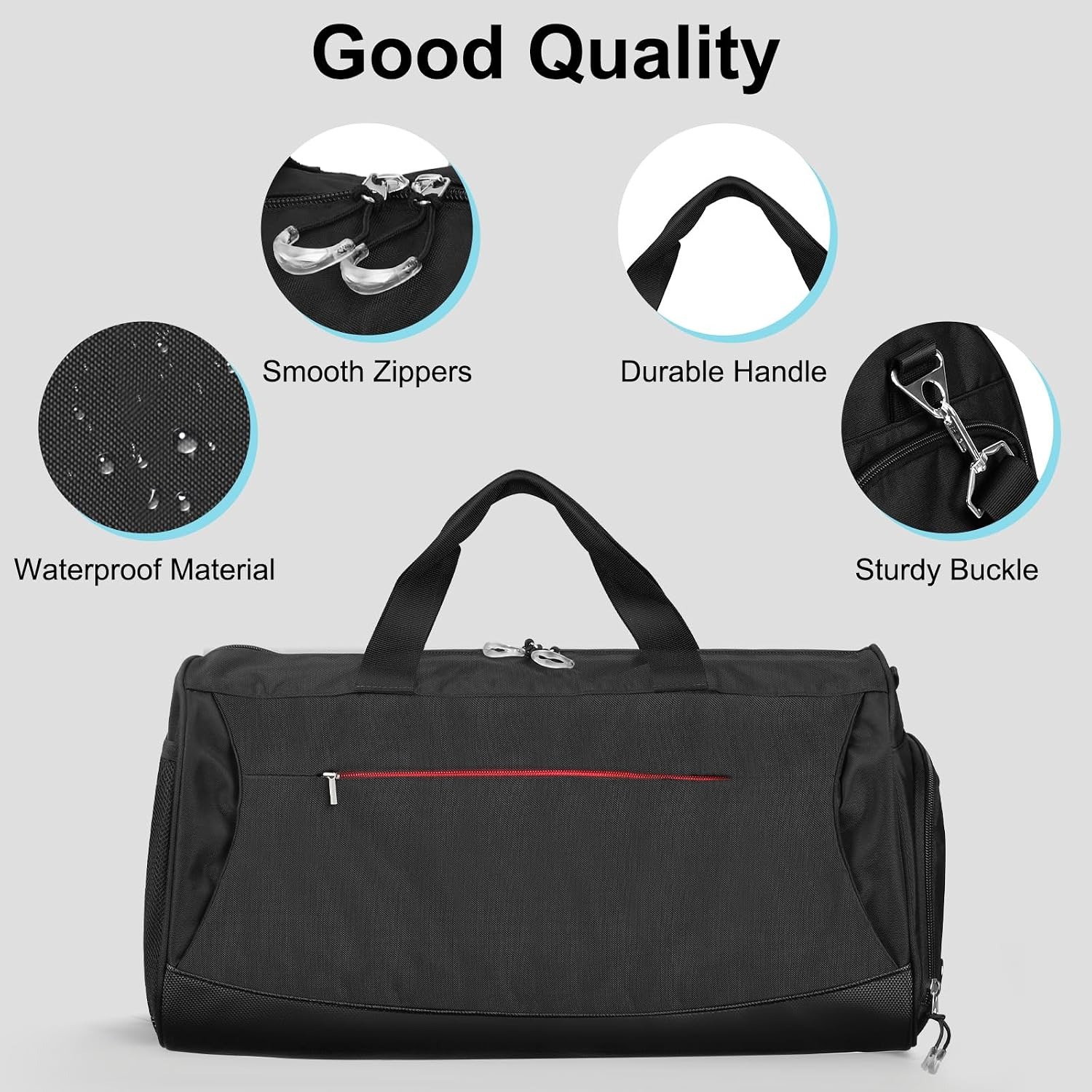
The fabric is oxford, which is the standard choice for sports and travel bags. It is a woven synthetic that resists scuffing, dries fast and does not add much weight. The whole bag comes in at 800 g empty, so almost everything you feel on your shoulder is your own gear.
The water resistance level is listed as waterproof, and there is a firmer water-resistant base panel. That panel does two jobs. It helps the bag keep its shape instead of slumping, and it keeps moisture from soaking up through the bottom when you set the bag down on wet tiles, grass or a car park. Anyone who has put a bag down in a changing room knows why that matters.
Stress points are reinforced with extra stitching. On a duffle, stress points mean the strap anchors, the handle bases and the corners. Those are the places that fail first on cheap bags, usually because someone overloaded them.
A practical note on waterproofing. Treat it as rain-resistant. It will handle a walk through a shower and a wet floor. It is not designed to be submerged, and no zip on a bag at this price is fully sealed.
Carrying it
Three options, which covers most situations.
Two fixed top handles are for short carries. Car boot to locker, hallway to taxi, that sort of thing. They are the fastest way to pick the bag up and the ones you use without thinking.
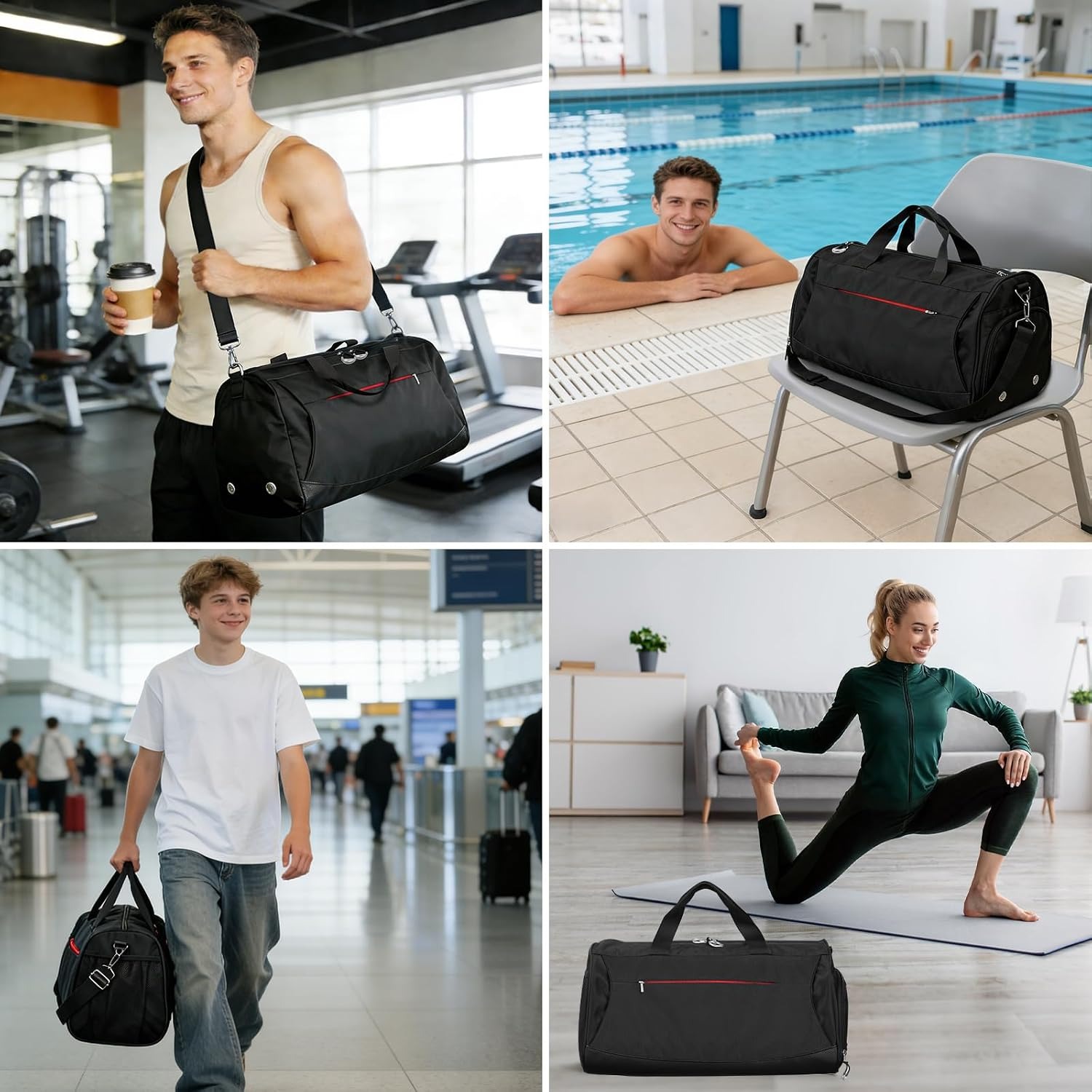
The shoulder strap is adjustable and detachable. Long, it works crossbody, which is the better option if you are walking any distance or cycling. Shorter, it sits on one shoulder. Detached, the bag becomes a slimmer package for a locker or an overhead bin.
There is also a telescopic handle feature listed, which pairs the bag with wheeled luggage so it sits on top of your suitcase handle rather than on your shoulder in an airport.
Who it suits
Gym regulars who want their shoes away from their shirts. Swimmers, because of the wet pocket. Five a side players and court sport players who need a bag that goes from car to pitch without fuss. Students with a locker. Anyone who keeps a spare kit in the car.
It also doubles as an overnight duffle bag. Pack nightwear, toiletries, a change of clothes and shoes and you have a one or two night bag without opening a suitcase. The plain black finish and simple styling mean it does not look obviously sporty when you use it that way.
Keeping it fresh
The maintenance routine is short but it only works if you actually do it.
Empty the bag after every session. The shoe compartment and the wet pocket in particular. Anything left in there overnight is what creates the smell.
Leave the zips open when the bag is at home so air can move through. A closed bag with a damp lining stays damp.
For cleaning, wipe the inside and outside with a damp cloth and a little mild soap, then let it air dry completely before you store or pack it. Skip the washing machine and the tumble dryer. Heat and agitation damage coated fabrics and loosen stitching, and a machine wash is the most common way a perfectly good bag gets ruined.
If something spills inside, deal with it the same day. Dried protein powder and old sports drink are much harder to shift a week later.
Small things that make a difference
Pack in the same order every time. Shoes in the shoe section first, towel in the wet pocket, clothes in the main space, phone and keys in the front zip pocket. Once the habit sets in you stop checking whether you have everything.
Do not overstuff it. The 30 litre figure is the working capacity, not a challenge. Forcing the zip closed is what puts strain on the slider and the seams.
Keep a spare plastic bag folded in the front pocket. It costs nothing and it is useful the day something is wetter or muddier than expected.
The short version
This is a 30 litre small gym bag built around separation. Shoes in their own vented section, wet kit in its own pocket, small items in their own compartments, bottle in a stretch mesh pouch on the side. Oxford fabric, waterproof rating, a reinforced base and 800 g of weight when empty.
It is the right size for one person and one session, or a night or two away. It is not the bag for someone carrying a full team kit. If your current bag smells or everything inside it ends up damp, the fix is not a bigger bag. It is a better layout, and that is what this one is for.