
The complete guide
How To Choose A Canvas Gym Holdall And Travel Duffle
The bag problem nobody talks about
Most of us own the wrong number of bags. There is a backpack for work, a gym bag that has seen better days, and a suitcase that only comes out twice a year. Then a weekend trip comes up, and none of them fit. The suitcase is overkill for two nights. The backpack cannot take shoes and a jacket. The gym bag could do it, but you would rather not carry it into a hotel lobby.
That gap, roughly two to four nights, is where a holdall earns its place. It is big enough to be genuinely useful and small enough that you are not dragging a case through a train station for one night away. A 55 litre duffle sits right in the middle of that range.
What this bag actually is
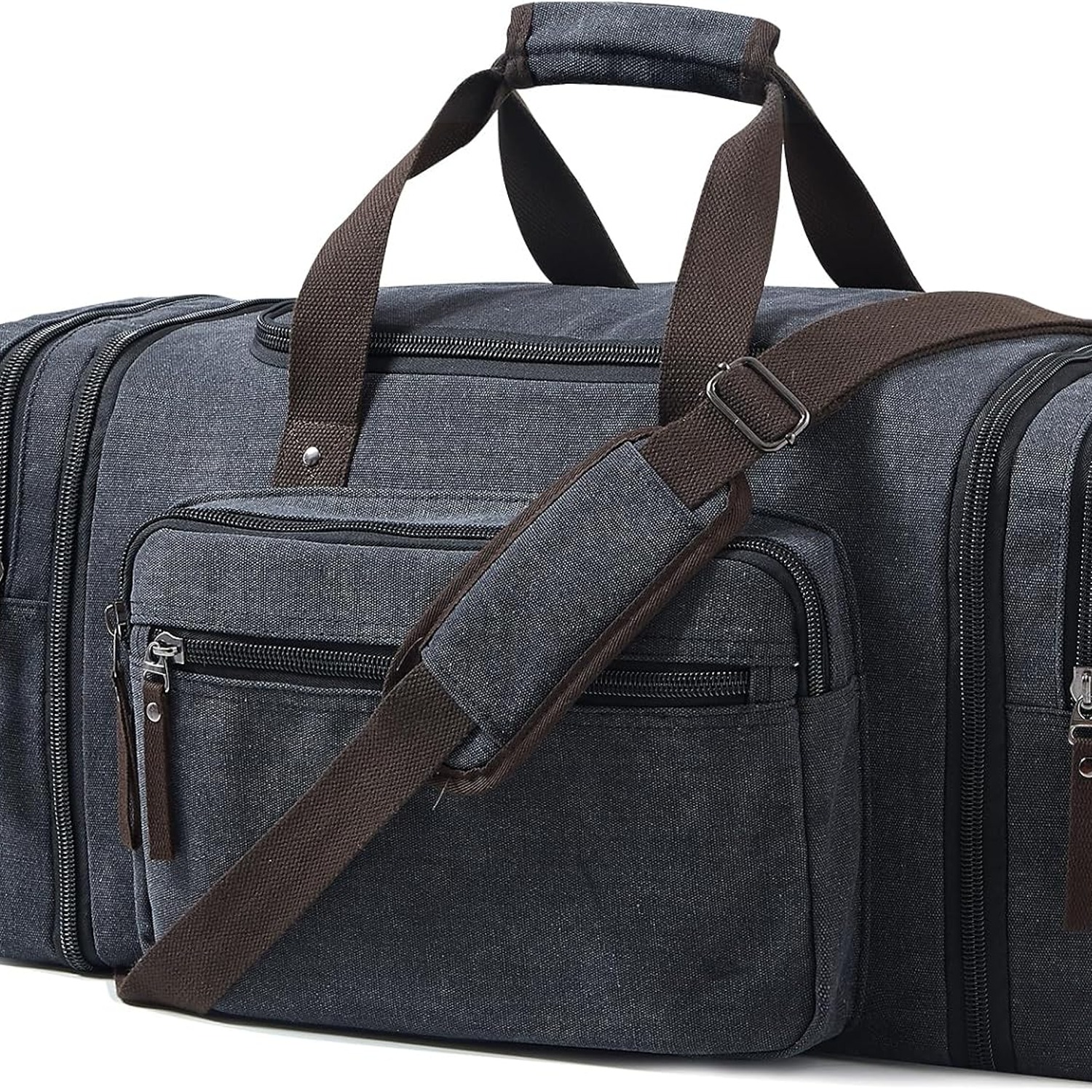
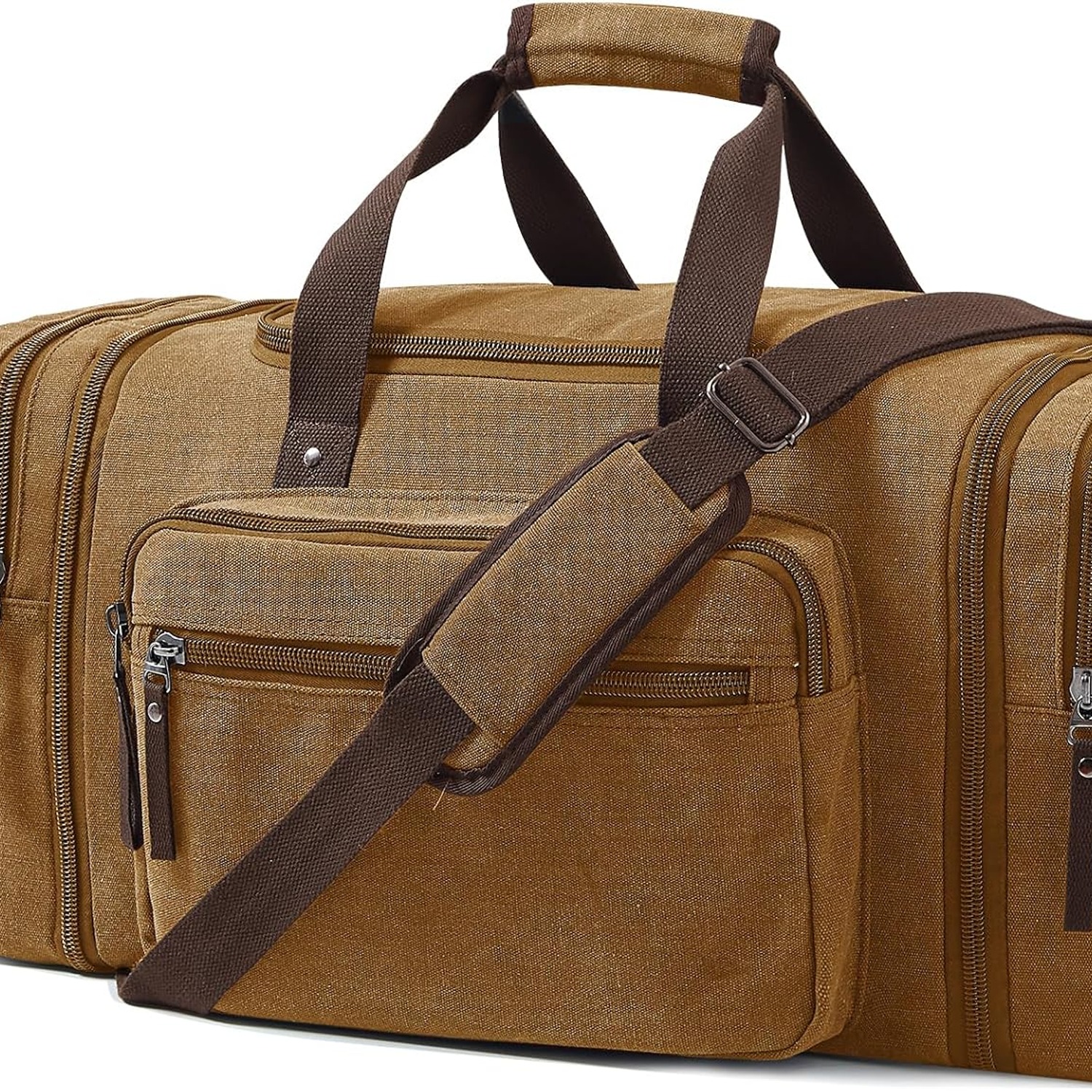
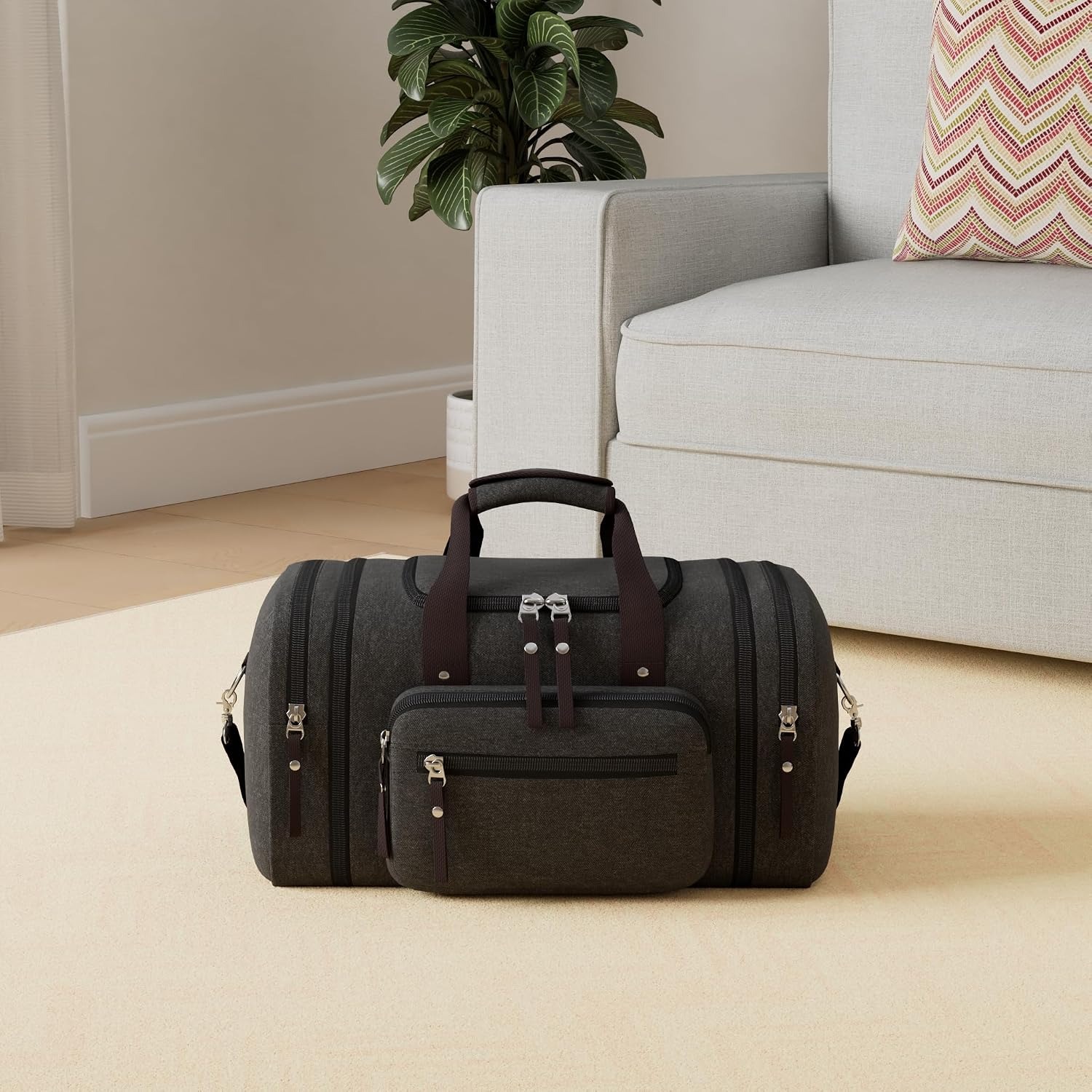
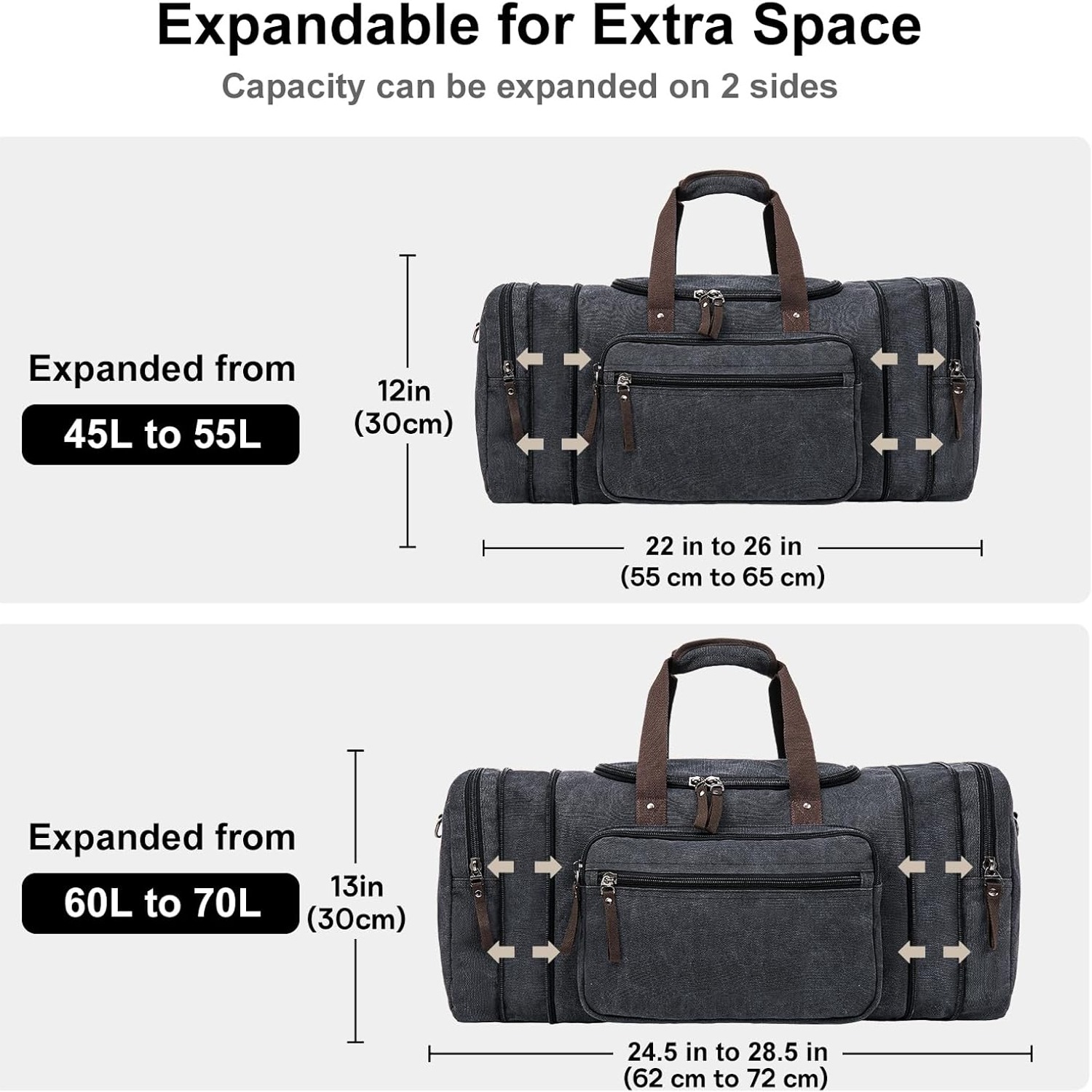
This is a 55 litre duffle measuring 65 x 27 x 30 cm, expanding up to 65 cm in length. It weighs 1.46 kg empty. The colour is dark grey and the listed material type is polyvinyl chloride. It closes with a zip, has web handles on top and comes with a removable shoulder strap. There is one main compartment.
That last detail matters, so it is worth sitting with. One compartment is not a shortcoming, it is a design decision. Divided bags force your packing to match the dividers. A single space lets you pack shoes flat along the bottom, clothes above, and a laptop sleeve down one side. If you want structure, you add it with packing cubes rather than being stuck with whatever the manufacturer decided.
The maker's description also states the bag is not water resistant. Be realistic about that. It is fine from the car to the gym door in light rain. It is not a bag to leave on wet ground or carry through a storm without cover.
How the expandable part works
Expandable sounds like marketing until you have used one. The idea is simple. When you are packing light, the bag sits more compact and holds its shape. When you need more room, usually on the way home, the length stretches to 65 cm and you get the extra space without needing a second bag.
The practical benefit is that the bag does not look wrong when it is half empty. A rigid 55 litre duffle carrying one night's clothes looks like a deflated balloon. A bag that can pull in a little keeps its lines.
Who this suits
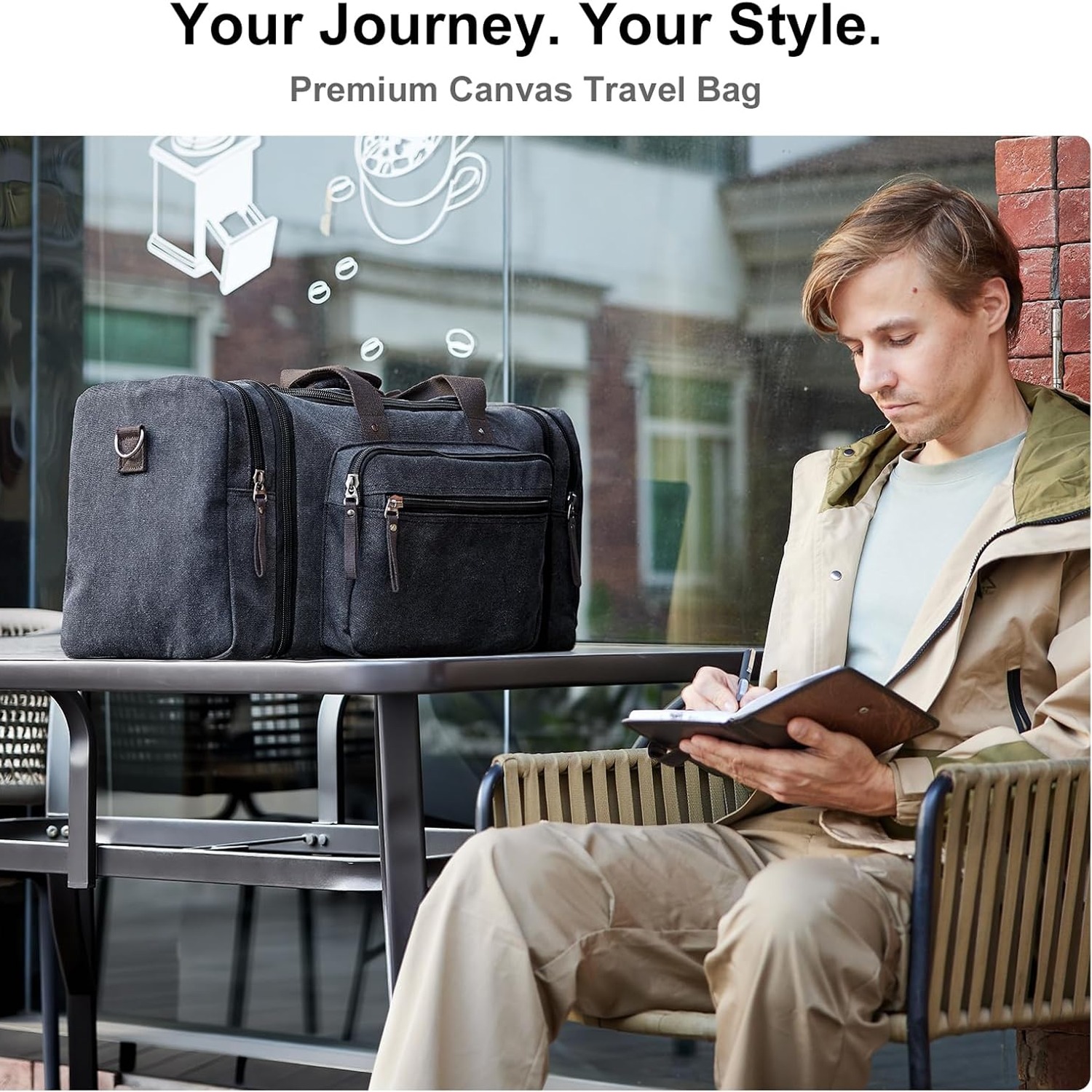
The gym and travel crossover. If you go to the gym a few times a week and travel for work or weekends occasionally, one bag covering both is less stuff to own. The neutral dark grey helps, because a bag covered in sports branding is harder to take to a client meeting.
Short-trip travellers. Two to four nights is the sweet spot. Many people who search for the best 55 litre travel bag are really after something that covers a Friday to Monday without checking luggage.
People who hate wheels. Wheeled cases are brilliant on smooth airport floors and awful on cobbles, stairs and crowded trains. A duffle weighing 1.46 kg goes over the shoulder and up the stairs without a thought.
Anyone buying a gift. There is no sizing to guess and no colour that will offend. A plain holdall is one of the safer presents you can give an adult.
Who it suits less well: anyone who needs a dedicated padded laptop compartment (use a separate sleeve), anyone carrying heavy loads over long distances where wheels win, and anyone travelling through genuinely wet conditions without a cover.
How to pick the right size
The honest shortcut is to count nights, not litres.
One to two nights needs roughly 30 to 40 litres. Two to four nights is the 45 to 60 litre band, which is where this bag sits. Five nights and up usually means a case or a 70 litre plus bag, unless you are a very disciplined packer.
Then check your airline. Cabin size limits vary, and 65 x 27 x 30 cm will exceed some carriers' stated dimensions. A soft bag can often be compressed into a sizer when under-packed, but never assume. Look up the limit for the airline you actually fly most, then decide whether you plan to use this as a cabin bag or as checked luggage.
One more size test: think about where the bag lives when you are not using it. A 55 litre duffle folds down far smaller than a hard case, which is why people in flats tend to prefer them.
Carry comfort, and why the strap comes off
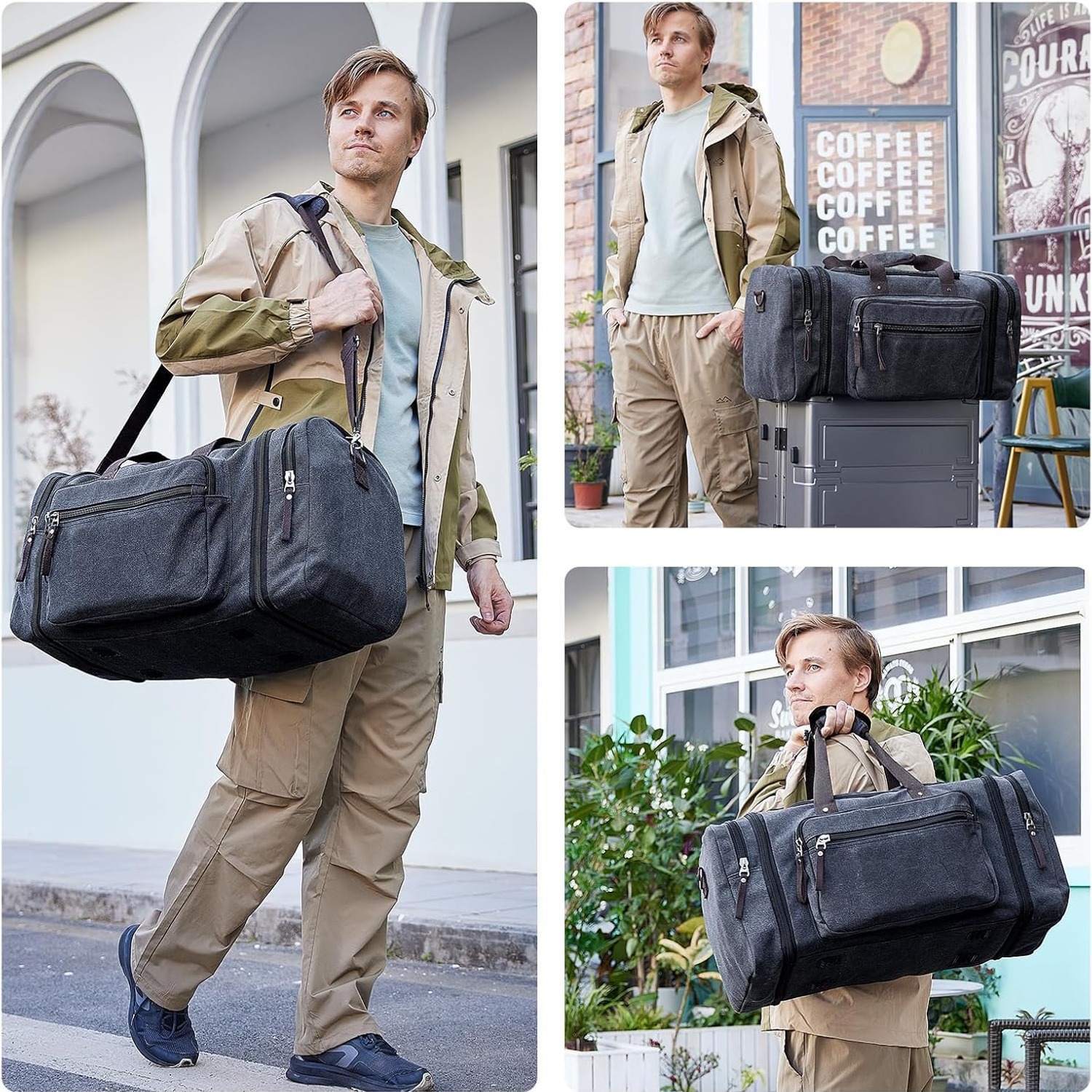
Two carry options sounds basic but it changes how you use a bag. The web handles are for short moves. Off the floor, into the boot, onto a luggage rack. The shoulder strap is for anything longer than a few metres.
Taking the strap off is genuinely useful. Loose straps catch on conveyor belts, car boot latches and seat frames. When the bag is going into an overhead locker or under a seat, clipping the strap off and tucking it inside saves a lot of small frustrations.
If you are packing heavy, keep the dense items (shoes, toiletry bag, laptop) low and close to your back when the bag is on your shoulder. The load sits better and the strap digs in less.
Packing it well
A single compartment rewards a bit of method.
Shoes go in first, soles down, along the base, ideally in a shoe bag. Clothes roll rather than fold, because rolled items fill gaps and wrinkle less. Keep one small zip pouch for cables, chargers and small items, otherwise they migrate to the bottom and you will be digging. Toiletries go in a sealed bag near the top so you can reach them without unpacking.
If you travel with a laptop, put it in a padded sleeve and slide it against the long side of the bag, not the bottom. Nothing in the maker's description confirms a dedicated padded laptop section, so the sleeve is doing the protection work.
Looking after it
Care here is simple and worth doing. Wipe the outside with a damp cloth and a little mild soap when it needs it, then let it air dry at room temperature. Keep it away from radiators and strong direct sun, which can harden or warp the material over time. Do not machine wash it and do not tumble dry it.
After the gym, empty it the same day and leave the zip open. Damp towels left sitting in a closed bag are how every bag ends up smelling. Give the base a wipe occasionally, because that is the part that meets gym floors and airport tiles.
For storage, leave it loosely packed with a rolled towel inside rather than flattened under heavy boxes. It holds its shape better and is ready to use next time.
Small things that make a difference
Label the bag. A luggage tag with a phone number costs very little and matters if it ends up in the wrong car or the wrong locker.
Pack a folded tote inside. It weighs almost nothing and solves the problem of coming home with more than you left with, even on top of the expandable length.
Check the zip now and then. On any bag, the zip is the first thing to show wear. Keeping it clean of grit and not forcing it when overpacked will add years.
The short version
This is a 55 litre dark grey duffle, 65 x 27 x 30 cm, expanding up to 65 cm in length, weighing 1.46 kg. One zipped main compartment, web handles, removable shoulder strap. Listed material is polyvinyl chloride and it is not water resistant.
It suits people who want one bag for the gym and for short trips, who prefer carrying over wheeling, and who would rather pack into one big space than fight a set of small pockets. It is less suitable if you need a padded laptop section built in or you regularly travel in heavy rain without cover.
If you mostly take two to four night trips and you are tired of owning three bags that each half work, this is the kind of bag that quietly replaces all of them.